Primula Classic Stovetop Espresso Maker 6-Cup Review
As an Amazon Associate we earn from qualifying purchases made through links on this page — it doesn't affect what we score, or how. How this works
 Scored
The short version
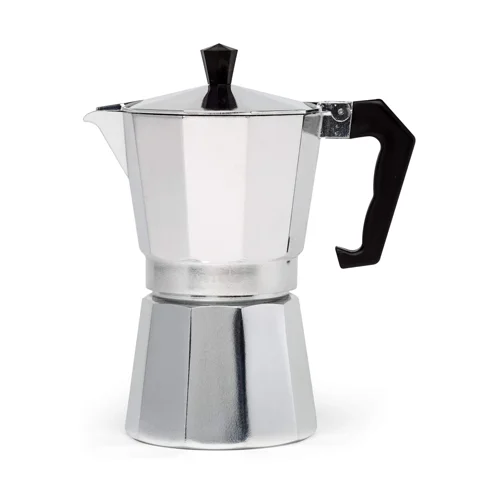
The Primula Classic Stovetop Espresso Maker 6-cup is a budget aluminum moka pot. It does the same job as the better-known Italian pots: you fill the bottom with water, pack coffee into a basket, put it on a burner, and steam pressure pushes hot coffee up into the top chamber. The reason people look at it is simple. It costs noticeably less than the Bialetti Moka Express, and for someone who is not sure they will like moka coffee, that matters.
This review is based on the manufacturer's product page, retailer listings and published comparisons, not on our own long-term use. Where an opinion comes from a named source, we say so. Our summary is that the Primula Classic makes sense as a low-cost trial, and that the Bialetti is the safer pick if you already know you want a moka pot for the long run.
What you get
Primula describes the pot as "carefully crafted with strong, long-lasting aluminum." That is a marketing line, and we have no way to confirm the longevity claim from a spec sheet, so read it as the maker's intent rather than a promise. What is certain is the material: aluminum, the same as the Bialetti, which means it heats quickly and does not work on induction without help.
The pot is sold in sizes of 1, 3, 6, 9 and 12 cups. Primula describes the maker as producing demitasse servings of espresso-style coffee within minutes. A demitasse is a small cup, so the cup count on a moka pot is a count of small servings, not of large mugs. For two people who each want a modest cup, the 6-cup is the usual starting point, and it is the size this review covers.
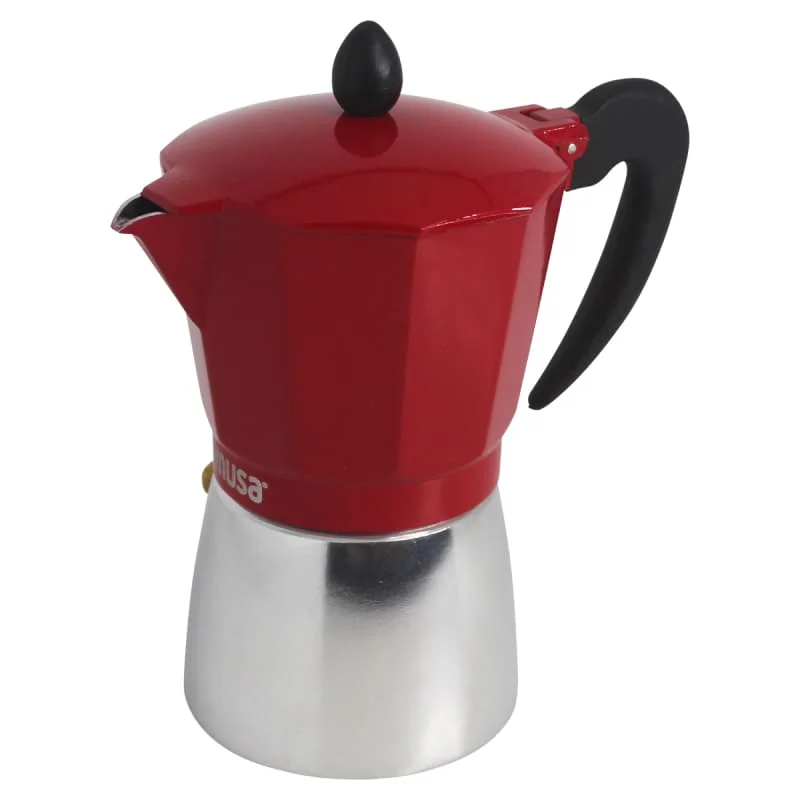
The product images carry two labels worth noting. One reads "Certified Safety Valve" and the other reads "Heat Resistant Handle." Both are useful features on paper. A safety valve lets the pot release pressure if the flow of water is blocked, and a heat resistant handle is meant to keep your hand from the hottest part of the pot. The page gives no further detail on either, so we cannot say how the valve is certified or how much heat the handle resists.
Who it is for
The Primula Classic is aimed at three kinds of buyer. The first is the curious coffee drinker who wants to find out whether moka pot coffee is for them before spending more. The second is someone outfitting a camp kitchen, a cabin or a dorm and wants a pot that is cheap enough to lose or replace. The third is anyone who already owns a moka pot and wants a second one so they can brew a different size or keep a spare at another location.
Primula says it works on all electric, ceramic and gas stove tops, including propane, and it presents the pot as a camping accessory. That propane mention is a point in its favor for outdoor use. Its page does not mention induction, so if you cook on induction, do not assume it will work. Aluminum alone does not heat on an induction cooktop, and we would treat any aluminum pot as needing a separate adapter plate unless the maker says otherwise.
How a moka pot works, and what to expect
Whatever the brand, a moka pot makes strong, concentrated coffee using steam pressure of roughly 1 to 2 bar. A pump espresso machine works at about 9 bar. So a moka pot produces something closer to a very strong stovetop brew than to true espresso, and it will not deliver the crema you see from a machine. If that is a deal breaker, no moka pot, Primula or otherwise, will satisfy you.
The method is the same for this pot as for any other. Fill the water chamber up to the safety valve and no higher. Fill the basket with medium-ground coffee, level it, and do not tamp. Close the pot tightly, set it on moderate heat, and take it off the burner when you hear the first gurgle. Do not walk away while it brews. Grind size and heat matter more with this style of pot than with almost any other brewer, so if your first cup tastes bitter or thin, change one of those two things before you blame the pot.
What the evidence says about quality
This is where the Primula needs the most honesty, because the evidence is thinner than for the Bialetti. We did not find a major equipment-testing publication that reviewed this exact pot in depth. What we did find is a comparison on a smaller blog, Compare Maniac, which looked at Primula against Bialetti. That site has less authority than a testing outlet, so we treat its conclusions as a hint and not as a finding. It suggested that quality can vary from pot to pot with the Primula, and that replacement gaskets and filters are harder to find than for the Bialetti.
That combination is typical of a budget product, and it is worth thinking through. If build quality is somewhat uneven, then a lower price partly reflects that you are accepting more variation. If replacement parts are harder to source, then the pot may have a shorter useful life, because the gasket is the part that wears out first on any moka pot. A pot that cannot easily get a new gasket can end up thrown away over a small rubber ring.
We would not call these dealbreakers. Plenty of people buy inexpensive moka pots and are happy with them. But they are real trade-offs, and you should know about them before you buy.
Popularity and ranking
On Amazon, the Primula Classic carries an Amazon's Choice badge. That badge is Amazon's own label, and Amazon attaches it to products based on its own criteria. It tells you the pot sells well at its price. It does not tell you how it will hold up after a year of use, so we do not lean on it.
Features at a glance
Material. Aluminum, per Primula's product page. Light, quick to heat and quick to cool.
Sizes. 1, 3, 6, 9 and 12 cups. The Bialetti is also offered in an 18-cup size, which this pot is not.
Stove compatibility. Electric, ceramic and gas, including propane. No mention of induction.
Safety valve. Labeled as a certified safety valve in the product imagery, without further detail.
Handle. Labeled as heat resistant in the product imagery. As with any moka pot, we would still handle the pot carefully while it is hot.
Cleaning. Primula says to rinse the parts with warm water and let them dry before reassembling. That is a hand-wash routine, and it is the same approach we recommend for any aluminum moka pot.
The drawbacks
Less proof of consistency. Because we found no deep review from a major testing outlet, there is less independent evidence about how consistent the pot is. The one comparison we did find suggests variation from pot to pot. If you buy one and it arrives with a poorly fitting top or a loose seal, return it.
Parts are harder to find. Gaskets and filters for the Primula are, per that comparison, harder to track down than those for the Bialetti. If you expect to keep the pot for years, check whether the replacement parts you will need are in stock before you commit.
No induction. The product page lists electric, ceramic and gas, and says nothing about induction. If you cook on induction, you will need an adapter plate or a different type of pot altogether, so you may want to browse the other kitchen picks in our Home & Living section.
Aluminum cares. Like all aluminum moka pots, it needs a gentle hand-wash. Letting it sit wet or scrubbing it harshly are both habits to avoid, and the maker's own cleaning advice is to rinse and dry.
Care and upkeep
The care routine for this pot is the same as for any other moka pot. Let it cool, take it apart, rinse the parts with warm water and let everything dry before you put it back together. Replace the gasket about once a year, or sooner if it hardens, cracks or stops sealing. If brewing starts to take noticeably longer, or coffee leaks from the seam, check the gasket and the filter plate before you blame the coffee. Because replacement parts for this pot may be harder to find, it is smart to buy a spare gasket when you buy the pot, if you can find one that fits the 6-cup size.
Primula Classic versus the Bialetti
The comparison most readers care about is simple. The Primula is the budget pick, and the Bialetti is the mid-range pick with the stronger track record. They are both aluminum, both sold in a range of cup sizes, and both make moka-style coffee on a stove. The differences are in the evidence and the ecosystem. The Bialetti has published reviews from America's Test Kitchen and others, a long history with this form, and easier access to parts. The Primula has a lower price and a camping-friendly stove list, along with less independent coverage.
If you are standing in front of both and trying to decide, ask yourself one question. Do you already know you will use a moka pot regularly? If yes, the Bialetti is the safer purchase. If you are not sure, the Primula lets you find out for less.
Who should skip it
Skip the Primula Classic if you cook on induction and do not want to buy extra gear, if you want a pot with deep independent reviews behind it, or if you plan to keep one pot for many years and want spare parts to be easy to find. Skip any moka pot if you want real espresso with crema, since the steam pressure involved is far lower than on a pump machine.
Bottom line
The Primula Classic Stovetop Espresso Maker 6-cup is a reasonable low-cost way to try moka pot coffee. It is aluminum, comes in a good range of sizes, lists broad stove compatibility including propane, and has the safety valve and heat resistant handle you would want on a pot like this. The evidence for its consistency is thin, and the one comparison we found suggests quality varies and spare parts are harder to find. That makes it a pot to buy if the low price is what you need, and to avoid if you want something to rely on for the long term. For most first-time buyers, the Bialetti is the safer pick. For a cheap trial, the Primula is a fair choice, and if you like milk in your coffee, our milk frother review covers an inexpensive add-on for the same morning routine.